Wednesday, September 15, 2021

Pictures from Barry's 100 mile wilderness runs (2019-2021)

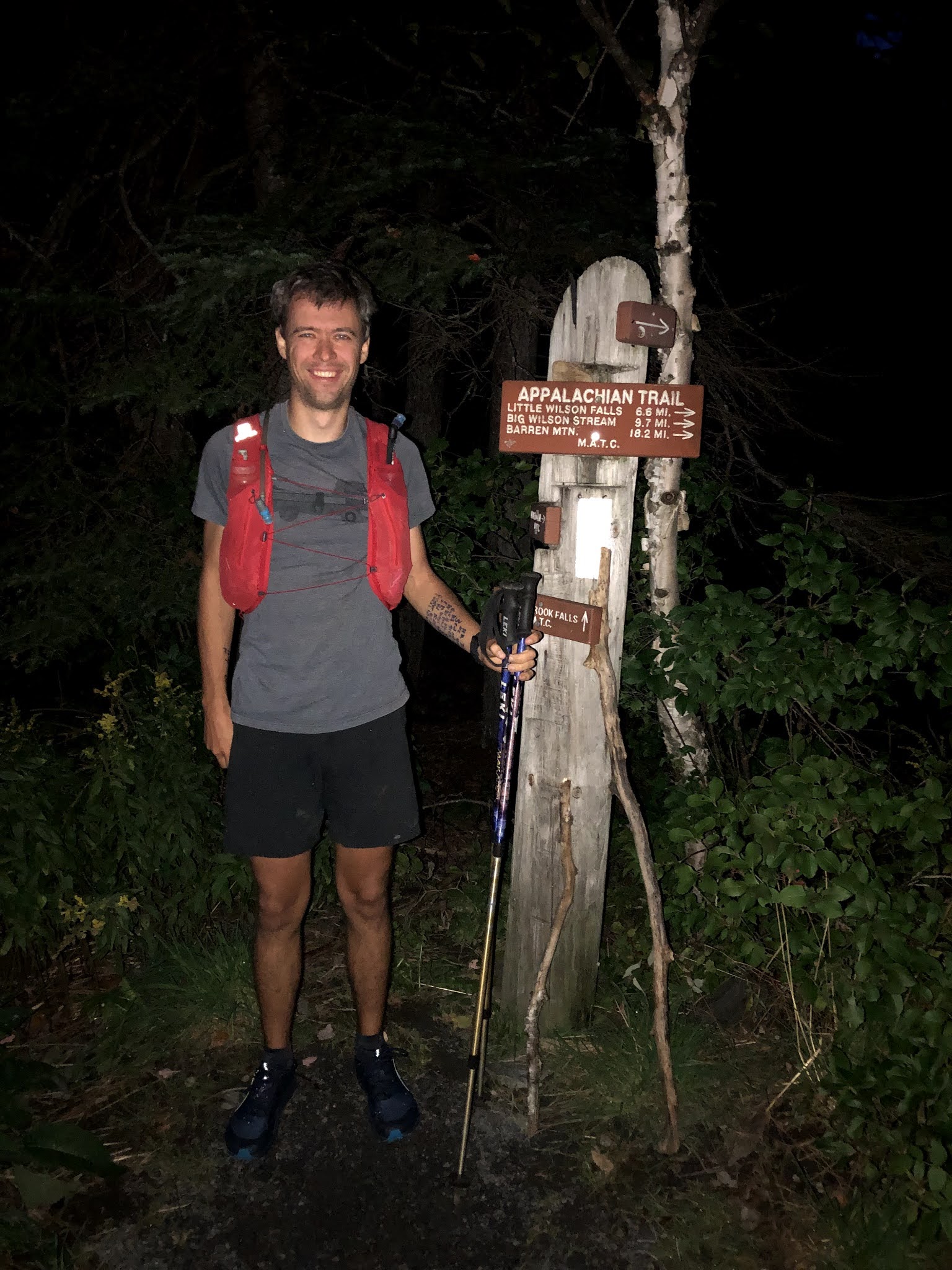
 First time - July 13, 2019 -

  • Quit at mile 52 after fainting
  • Support from John and Paul starting at mile 45


2nd Time - June 14, 2020 -  Completed!

  • Support from brother Paul and cousin Ash, including Paul running a significant portion of the end with Barry and ending up in the ER with hyponatremia :(
  • Brought baby Conall

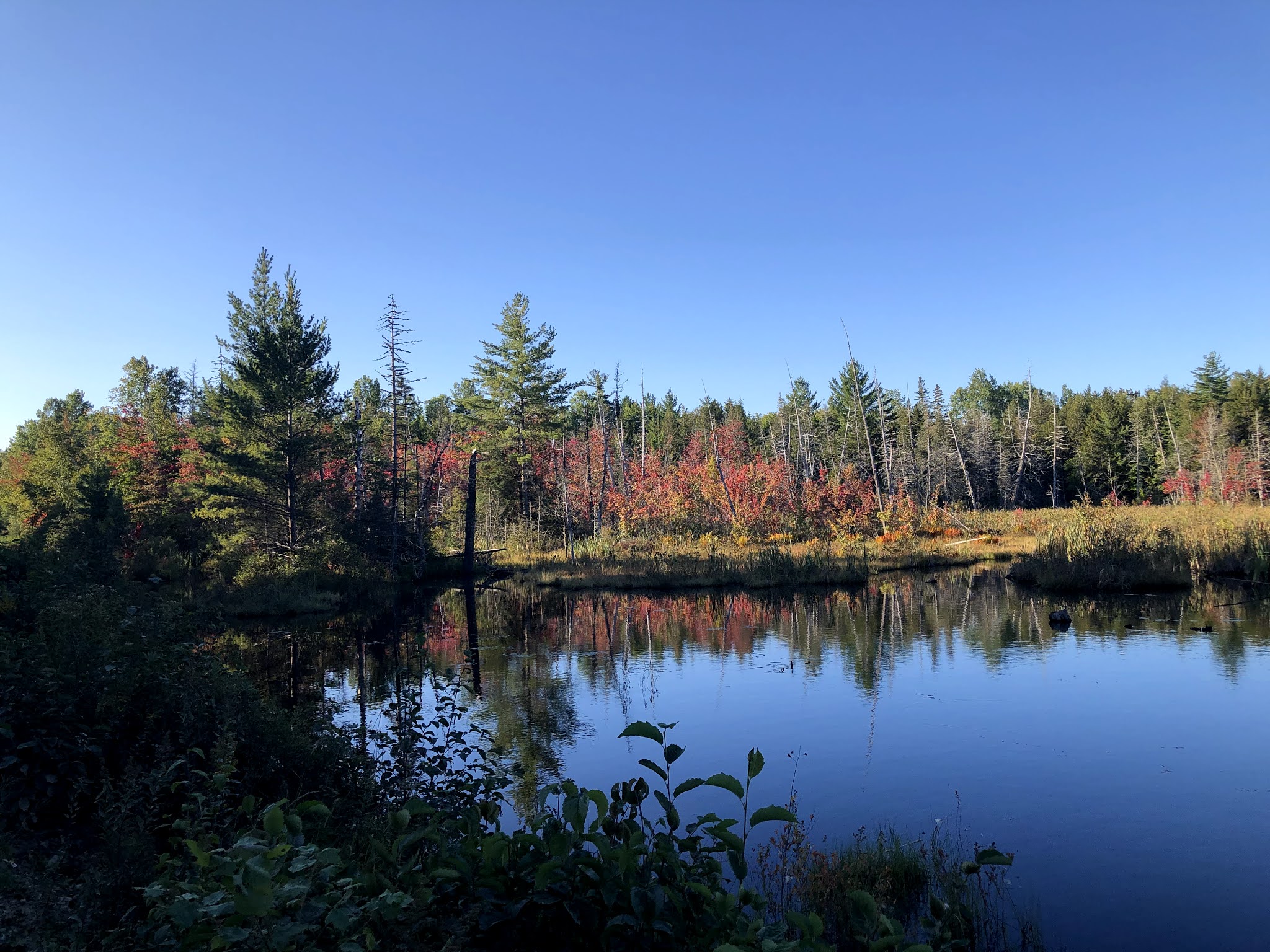
3rd Time - September 25, 2020 - 

  • with 3 kids!! 
  • Barry stopped at mile 83
  • Beautiful autumn colors


Waiting for Daddy at Polywog Bridge


Barry resting at Gulf Hagas after he quit.


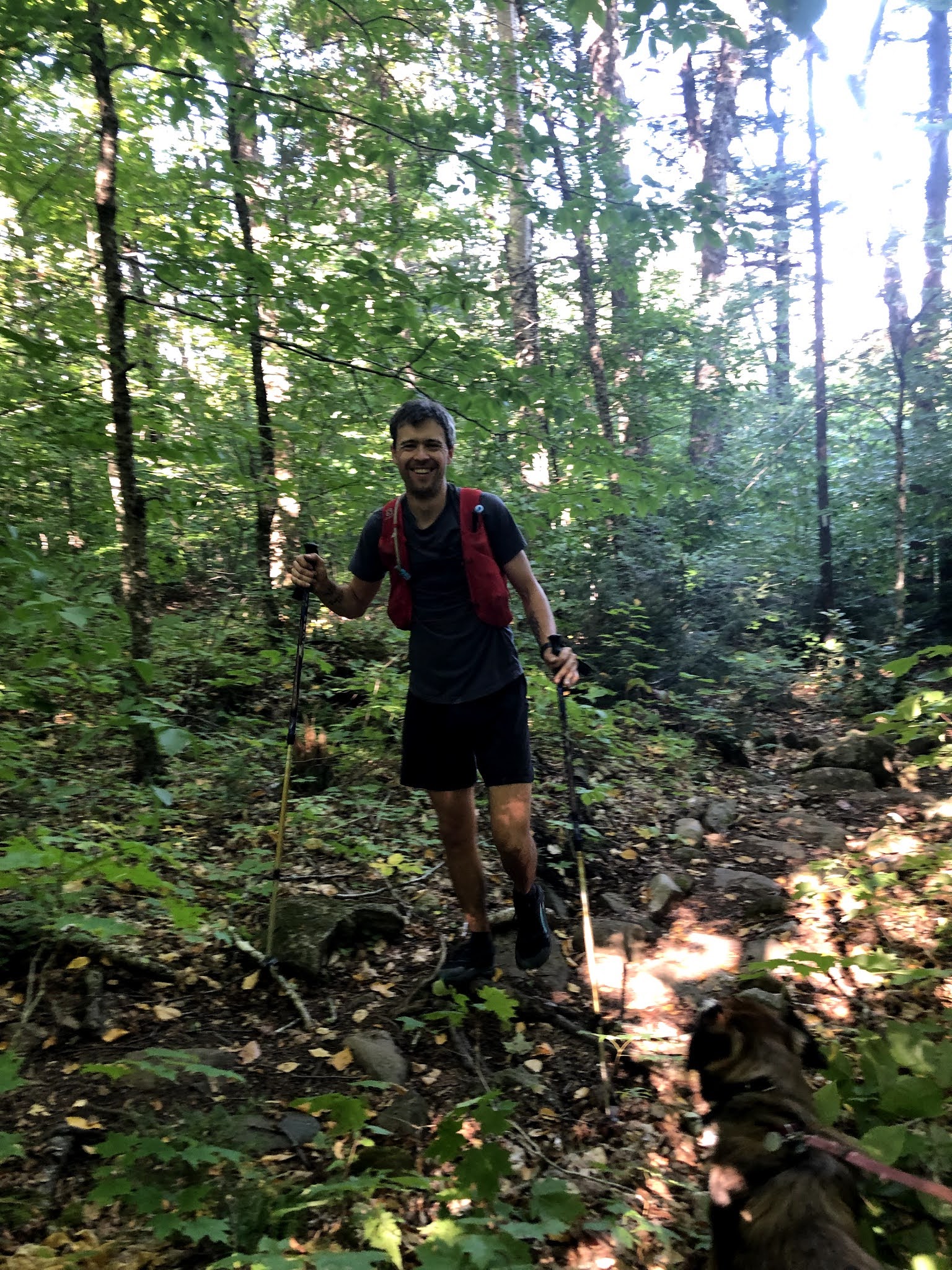
4th time - June, 2021

  • Barry stopped at mile 60
  • Brought Pepper the puppy!
  • Unsupported attempt; I didn’t take any pictures this time.
5th time - September 13, 2021 - Barry sets new FKT!
  • Brought Pepper
  • See Barry's write up here and my thoughts here


Interesting that you can see that the polywog bridge has deteriorated since 2020.


Supply Notes and A Wife's Musings on Barry's 100 Mile Wilderness FKT

When Barry started talking about running the 100 mile wilderness over 3 years ago, I didn’t know what to think.  I know he loves to run long distances and do crazy hard things, but I must admit I was nervous about the remote and rugged terrain, both for him and anyone supporting him.  I had never even been up in the north woods, except for one hike up Katahdin when we were first married.  At first I thought the resupply points would be few and far between but I quickly learned that, thanks to the maze of logging roads crisscrossing the wilderness, I could meet him quite a bit.  I enlarged and printed out a few maps that I found online.  I printed and wrote out directions on google maps because I knew my phone wouldn’t have service (I learned a better method though - see below).  I peppered Phil Pepin with questions about access roads and directions.  To say it mildly, I was nervous.  The first few times Barry ran, I would rush off to the next road crossing thinking he might show up way sooner than expected and I needed to be there!  But I learned - I learned to take my time, enjoy some hikes, and trust that he wasn’t going to somehow start running a 10 minute mile over Whitecap :P  There was even one memorable time when I took all 3 of our little kids with me and they had a blast sleeping in the back of our small jeep.

One unique thing about this particular run is that because I knew the roads so well, i was much more relaxed and I spent more time chatting with through-hikers.  At the bottom of Whitecap on the KI road, I was surprised to meet two people (Owen and Christina) who were also supporting two runners (Doug and Gwen) who were running  the 100 mile wilderness on that same day.  I couldn’t believe it - the chances of two other people running it on the same day as Barry!  Barry came through but I stayed to chat and I was able to help Christina with some road directions. 

I also learned how to read my runner.  I’ve supported Barry on ultra-runs since his first 50 miler before we were even dating in 2009, but I had never supported him on something so long and so potentially dangerous.  The first time he ran it and pulled out at mile 52 was a scary experience.  At mile 45, he had begun to look and act very, very out of it.  His face had turned ashen.  He looked like crap and he wasn’t really making a whole lot of sense.  He had never looked like that in the middle of a run before (I do remember one race where he looked like that at the finish - the 2019 Pineland farms 50 miler where he got 3rd place) .  His two brothers were with me supporting him on this attempt and I was very relieved that his younger brother, John, decided to run the next 7 miles with him.  It was after that 7 miles that Barry fainted and fell head-first towards the ground.  To say it mildly, I wasn’t really excited when he wanted to try it again the next year.  But as I supported him over the course of the following 2 years and 3 more attempts (the one he completed it with a broken toe and the two where he pulled out at mile 83 and mile 60), I began to be able to tell when he just needed to take it easy and rest and when he needed to stop.  So when he got to mile 81 on this final (successful) FKT attempt, I was ready.  I could tell he was discouraged.  I could tell he was exhausted.  But he didn’t look dangerously unsafe.  I decided that he was giving it all he had, he wasn’t taking the expected calories and water, but I didn’t think he was medically unsafe.  That was a judgment call on my part and I didn’t make it lightly because after seeing him faint that first time, I have had horrible fears of him collapsed on the side of the trail in the middle of nowhere.  But this time, I just thought he needed encouragement.  He needed to know that he was on pace, that he was doing it, that he just needed to keep putting one foot in front of the other at a 16.5 minute/mile pace and he would finally succeed in accomplishing this amazing goal he had been shooting for since 2018.  And it worked.  He said he would have stopped if it hadn’t been for my belief in him.  Because after running that far and being that exhausted, he had lost his belief in himself.  If being married to Barry for 11 years has taught me anything, it has taught me to never underestimate him and that when the going gets tough, that is when Barry gets going.  And he did. (See pictures from his different attempts here)


A few support notes:

-The resupply spots (and the runner’s mileage) are as follows: Otter Creek lean-to (15 miles), KI Road (30 miles), West Branch pond road (44.8 miles), Johnston pond road (51.7 miles), Jo Mary Road (58.6 miles), Nahmakanta lake south end (73.8 miles), Nahmakanta lake north end (80ish miles), polywog bridge (82.10 miles), Abol bridge (finish).

-The KI/Jo Mary forest use road map that you can get at any of the checkpoints entering the wilderness area  is invaluable.  It’s way better at showing the roads than any map you can find online.  

-The GAIA GPS app works fantastic, even when you don’t have service (which is most of the time).  It shows all the roads and trails and your exact position, even if you don’t have service.   I went ahead and purchased the subscription so that I could download the area maps and know beyond a shadow of a doubt that I would be able to navigate.  However, I’ve used the free version in the past and it worked just fine.

-The Maine Gazetteer is also helpful for the few times when you need to drive off the KI/Jo Mary road map. However, if you're not in Maine much, don't worry about purchasing it. Usually you can pick up enough service somewhere on the main roads to get driving directions.

-The main logging roads that you use to access the resupply points are very well maintained and don’t require high-clearance vehicles.  There are rocks and potholes to avoid, but nothing that a smaller car can’t handle.  There are a series of connecting roads between the KI road and West Branch pond road (after whitecap) that is more remote and has a few areas where I was thankful to have a vehicle with a little more clearance.  However, careful driving in a low-clearance car probably would have worked fine too.  

-Stay on the main roads unless you know for a fact that you should turn on to a smaller unmarked road.  Usually, if the road is not marked and you don’t KNOW you should be on it, than that means you should stay on the road that is obviously more traveled (Exceptions: 15 mile resupply point and connection between KI road (30 mile resupply) and West Branch pond road (45 mile resupply))

-You can expect to drive 30-45 mph on most of the logging roads if you have a decent vehicle.  But don’t underestimate the time it takes to navigate.  This time I used the GAIA GPS app to record all my driving and I drove over 300 miles (not counting travel to and from the beginning and end points) around the wilderness area getting to all the resupply points.  

-The 15 mile resupply point is hard to find and not marked with any signage.  You take the Elliottsville Road off of HWY 15 just north of Monson.  After crossing Big Wilson Stream, make a left.  Continue past the bird sanctuary and the borestone mountain trailhead.  You will come down into a valley where the road gets more rough and there is clear signage saying that you are on private land (no camping, hiking allowed, etc).  Continue over a bridge and not too much farther along you will start to go up a hill just past a lovely meadow and there will be an unmarked road on your left.  Take that road - it’s probably the roughest road of the entire day but it’s not too bad if you go slow and avoid the rocks.  It goes for a ways, past otter pond (which you can’t see).  There is parking at the end and a trail that is not marked.  If you follow the main trail straight for a ways and then bear right up the mountain, it will cross the AT after about .75-1 mile.  If you turn left on the AT, you will go down towards otter creek lean to.  However, if you would like to access the AT much quicker and avoid the climb, just a short ways after the trail starts you will see a trace trail that veers off to the left.  It is marked with orange flagging and will take you to the AT at Long Pond Stream.

-The Monson general store has yummy food and is well-stocked with local goodies.  Much better than typical gas station fare.  Even found some cool 100 mile wilderness stickers there (somehow I had a feeling we might need a memento this time!)

-The shortest way to access the KI road AT crossing (mile 30) is from the North (north on HWY 15 to Greenville, right on Pleasant St/E St, past the airport, past Rum pond, past the Hedgehog checkpoint, onto KI road, and then Right towards the Gulf Hagas (not left towards head of the gulf).  The AT crosses before the Gulf Hagas parking.  OR you can access it from the south but it’s a longer drive south through Milo and Brownville and up the KI road past the KI road checkpoint.

-The back road connection from KI road (30 miles) to West Branch pond road (45 miles) cuts of SO MUCH driving time because you don’t have to go back out to HWY 11 and then up to the Jo Mary road.  Instead, head south on the KI road from the Gulf Hagas parking.  You will cross the West Branch of the Pleasant River.  There is a sharp left right after the river.  Don’t take it.  Instead continue on until the next major left.  The Ki-Jo Mary forest use map shows this clearly.  Continue up this road (some beautiful views in here) for quite a ways (don’t take the side roads) and then down into a valley and over a bridge.  After the bridge will be a sharp left turn.  It’s in this next section that the road gets a little rougher but keep going  and this will eventually drop you out right across from B Pond on what we have always called West Branch pond road.  Turn left and this will take you to the next AT crossing at mile 45.  From there you can navigate back past B pond and over to Johnston Pond Road where you will turn left again and go to the AT crossing by Crawford Pond at mile 52.  Then back out to the Jo-Mary road where you turn left to get to the last 4 supply spots.  Again, the GAIA GPS app and the Ki-Jo Mary road map will make most of this quite clear.

-There is a Hendersonville checkpoint after the Jo-Mary road crossing and before Nahmakanta lake supply.  It is usually open at night (at least it always has been when I’ve driven through) but it also has a phone that you can pick up and it will connect you with a 24 hour service that will raise the gate if for some reason it is closed.  Of note, just north of this checkpoint is a long hill where I usually get enough service on my phone to send out a few text messages.

100 Mile Wilderness FKT

 My recent attempt to set the fastest known time (FKT) on the 100 mile wilderness was not the first but thankfully for me and my longsuffering wife it would turn out to be my last. Setting a speed record on the 100 mile wilderness had become somewhat of an obsession. I grew up in Maine and when I started running ultramarathons, I always wondered if I'd graduate the the 100 mile distance. Even before I was aware that FKTs were a thing, I used to dream about running the 100 mile wilderness.  I first took a shot at the record on an absurdly hot day in July of 2019 and decided to stop after passing out at an aid point on Johnston road (my wife has terrible memories of watching me pitch forward face first into the dirt). The next year I tried again but I broke a big toe about 10 miles in. An FKT was out of the question but I wanted to finish so I hobbled through to Abol bridge in just under 35 hours, completing my first 100 mile "run" in the process. Two additional attempts followed, but both were ultimately derailed by GI issues. As I weighed my 5th and ultimately final attempt, I knew full well that my chances of success were not great. My training regimen over the summer had been minimal. With 3 young children, a puppy, a farm in the early stages of rehabilitation, and a full-time job as a physician, training for a 100 Mile Wilderness FKT just couldn’t be a priority. The most I had run in a week all summer was 31 miles.

I did have two big things in my favor though: familiarity with the trail and my wife Christy, the one-woman support crew of my dreams. I knew exactly what to expect and how to plan for each section of the trail. Christy knew how to access each road crossing and expertly meet my physical and emotional needs.

One thing that was different about this run is that I chose not to announce my intentions ahead of time. I appreciate and generally agree with this guideline but for me the announcements had begun to weigh on my mind. I wanted to run without any outside pressure. I figured that I really wouldn’t mind if the FKT arbiters decided to reject my record because of this breach of protocol. This run was much more about a personal and spiritual endeavor than getting some recognition. The FKT was a deeply personal challenge I needed to meet. If I met that challenge I would be fully satisfied whether I was recognized for it or not.

As usual I would run northbound. I knew from my experience with the trail and familiarity with Finn Melanson’s splits that I would need to preserve some energy going over the brutal Barren-Chairback range and the long and undulating climb up Whitecap. I would then spend that energy recouping my time on the much more runnable 13.8 miles between the west branch pond road (bottom of the northern slope of Whitecap) and the Jo Mary Road and try to keep up a respectable pace for as long as possible on the remaining sections of the run.


Starting at 5:45am on September 13, 2021, my strategy initially went roughly according to plan. The day was cool and initially overcast and I felt like I was moving well without pushing too hard. Somewhere along this section of trail I met an older guy named Doug who was also aiming to run the 100 mile wilderness. We wished each other well and I headed off marveling at the odds of meeting another runner on this remote and challenging trail.

Christy met me for the first resupply just past the Otter creek lean-to. I was feeling good and was glad to see I was right on pace. Next up was the Barren Chairback range. On this section I tried hard to dial myself back on the brutally steep and rugged climbs but pick up easy speed on any flats and downhills. The weather was sunny now but there was a cool and blustery wind that kept me from getting too hot. By the time I reached Chairback mountain I was still feeling strong and made a quick descent to the KI road where I discovered I was well ahead of my projected arrival. This gave me the confidence I needed to finally take the climb up Whitecap easy. I kept reminding myself that even if I was easily capable of running that long gradual climb, I’d make far more efficient use of my energy by waiting for flatter or downhill terrain. For the first time I was able to make it all the way to the top of Whitecap feeling really good and rapidly dropped down the steep 3 mile descent down to the West Branch pond road where I discovered I was now about 30 min ahead of my projected pace.

At this point my stomach began to gurgle, sending me intermittent waves of nausea. In the past I’ve always kept on eating and drinking as much as possible in spite of the nausea. This time I dialed back my intake and tried listening to my body for a change.

Apart from my GI distress I felt pretty strong. The terrain over to Jo Mary road is relatively runnable and I was able to pull ahead of the previous FKT pace and gain yet more time over my own projected splits as I surmounted little Boardman mountain and tore through the trail leading up to Jo Mary Road. This would turn out to be a good thing because I started to slow down as I made my way over the trail from Jo Mary road to Nahmakanta lake. This section is supposed to be about 15 miles but it felt like I would never get there. My GI issues persisted and I still wasn’t able to eat or drink much at all. I was deep into the run and doing very well overall but I was so tired that running this section 15 minutes slower than I had planned felt like a major blow. Then came the section of trail past Nahmakanta lake. The trail started out with a brief runnable stretch but then it started taking these maddening meanders up and down the slope of Nesuntabunt mountain. These little climbs felt like cruel and unusual punishment in my fragile physical and mental state. By the time the actual climb up Nesuntabunt had begun I was beginning to feel the FKT slip from my grasp. I kept seeing these beautiful rocks that seemed to be calling my name, inviting me to stop this nonsense and rest. Unusually shaped rocks and stumps began to look like hikers, bears, and fantastical creatures. I wasn’t hallucinating exactly but it felt like I was headed that way. My fluid and calorie intake also continued to be frighteningly minimal. My pace had slowed to a crawl. My right quad was beginning to give me increasingly severe jolts of pain.

There’s a little road at the bottom of Nesuntabunt. Christy was supposed to meet me about 2 miles further down the trail at Pollywog bridge but she presciently decided I might need some encouragement. When I saw Christy, I told her I wasn’t sure I could keep going, that the trail past Nahmakanta lake had really broken me down. But Christy told me I could still get the FKT, that she believed in me, that when the going got tough I was the guy that could push through. All I had to do was average a 16.5 minute mile for the rest of the run and I could still get the record. She also said shared encouraging messages from friends and family who had been following my spot tracker and were cheering me on.

“Running” a mile in less than 12 minutes is difficult even on the easiest terrain on the 100 mile wilderness. I had previously tried and failed to maintain a 16.5 min pace between Jo Mary Road and Nahmakanta lake and I knew this final stretch of trail involved more climbing. But Christy’s pep talk fired me up. I started off down the trail still feeling broken but not beaten, not yet anyway. My body might be disintegrating and my knee was making any downhill run look like a grotesque series of awkward hops, but I would find a way. Christy’s belief had reawakened my own belief.

There was no need to resupply anything when I got to Pollywog bridge. I still had most of the calories and fluids I had picked up at the Jo Mary road! Christy did give me some sour patch candies though. As it turned out, these candies and a few cautious sips of water were the only things my stomach could tolerate for the rest of my run.

The hikers I passed on this final section probably thought I was a lot more than half crazy. At times I was bent nearly double with stomach cramps. My right knee became progressively more painful and I would involuntarily yell in pain on the downhills. I grunted and groaned. I exhorted myself aloud—“come on Barry, COME ON, just keep going!” My GPS watch had totally malfunctioned and all it could tell me was what time it was. I thus had no idea whether I was on pace to set a new FKT until I got to rainbow ledges and read the sign indicating I had 6.1 miles to Abol bridge. I looked at my watch and saw I had nearly 2 hours left to get the FKT. I also knew the trail was mostly downhill. If it hadn’t been for my now swollen and extremely painful knee I believe I could have finished these remaining miles in about an hour and 20 minutes, possibly even less. As it was I needed all the time I had. I kept checking my watch towards the end though because I knew this was going to be close. I still wasn’t totally sure I would get it. Finally just as I was starting to really wonder when the road would appear, I met a hiker going the opposite direction who blithely informed me I had just over a mile left. I rechecked my watch. A MILE? I might not make this. I broke into an awkward limping run but thankfully that hiker was massively overestimating the distance. About 5 minutes later I saw the road through the trees. What a good feeling to get on that road and head towards Abol bridge. Christy was jumping and cheering me on. Even with the bridge so close, it took focused and determined effort to keep running until I touched the bridge. I was elated and relieved but so totally exhausted that I immediately sat down on the bridge rail, then hobbled over and sat down on the ground in the shade of our car. I had completed the FKT in 29 hours and 6 minutes, a mere 12 minutes faster than the previous record!


I’ve included my splits below. I didn’t keep track of my resupply times but they were usually less than 5 minutes. The times shown here are my departure times at each point. Road names are a bit tricky in the 100 mile wilderness but I’ve included approximate mileage based on “book miles” as reported in the Maine Appalachian trail guide.

Location

Departure time

Mile

Route 15

5:45am

0

Otter Creek trail crossing

9:45am

15

KI road

2:33pm

30

West Branch pond road

7:15pm

44.8

Johnston road

9:19pm

51.7

Jo Mary road

10:58pm

58.6

Nahmakanta stream road

3:17am

73.8

Pollywog Bridge

6:12am

82.1

Abol Bridge

10:51am

99.5

 I’ve learned a lot about this trail over the years I’ve spent trying to set the record. Here’s a list for the next prospective record holder (no particular order)

  1. For now, this FKT is still beatable for non-professional runners like me but I agree with others who have pointed out that an elite ultrarunner could probably run this route in less than 24 hours. I'm reasonably confident my own record will be surpassed soon, possibly even this year. 
  2. Do not underestimate the 100 mile wilderness. Acquaint yourself with just how ridiculously rough the trail is before setting any pace goals.
  3. Dry trail conditions are critically important if you are aiming to go as fast. There’s some sort of shale or slate rock in the southern part of the route that is slicker than ice when wet.
  4. Early June would seem like an ideal time to run the trail because it’s still fairly cool and you have maximal daylight. However the trail may not be fully cleared of blow downs. I attempted to set the FKT twice in June and both times the blow downs slowed be down by at least an hour. Think that’s an exaggeration? Imagine a huge spruce tree lying lengthwise down the trail in the middle of the night and then multiply that scenario with a few variations by 100 and you get the idea. I recommend running in September or early October. More daylight is nice but the trails will have the fewest blow downs and will be generally the driest. Late October and November offer the coolest temps but fallen leaves will make the trail slippery and hard to follow. 
  5. Cell service sufficient for text messages is typically available on the summits of the Barren-Chairback range and Whitecap, but I would take a GPS tracker with an SOS option. Even if you go with a support crew, there are extended sections of very remote terrain.
  6. I’ve run both supported and unsupported. If you can be pretty minimal with your supplies and have a good game plan for rapid water filtration/treatment, I believe you can run unsupported nearly as fast as you could supported. If you anticipate your margins will be as thin as mine were then obviously go supported. As my description shows, having a support crew can also offer game changing benefits in more intangible domains.
  7. Contact Phil Pepin (100 Mile Wilderness) If you have questions about the 100 mile wilderness and how to access the remote logging roads for your resupply points. He is a genuinely great person and has a wealth of information about the trail and access roads that would be difficult to find anywhere else. You might also stay at Phil’s campground. I have stayed there and found it very clean and comfortable.
  8. Maine Appalachian trail maps were helpful early on when I was planning my initial attempts and didn’t know much about the trail. I highly recommend buying the relevant maps.
  9. Your support crew can get good maps of the local logging roads at the Jo Mary or KI road checkpoints.  
  10. My wife wrote up some helpful resupply and direction notes in another blog post.  You can find it here.


Tuesday, May 23, 2017

Stepping Stones vs. Core Values

We've found that parenting with simplicity in mind is sometimes, well, complicated.  It requires intentionality, swimming against the current, doing things differently than what is currently practiced in mainstream parenting.  It's a mindset that doesn't come naturally to our plugged-in, Western society.

Even amidst making decisions for our family that we feel are in line with our desire for a simple home where our true values take precedence, I have discovered that it's easy to get lost in the details of those decisions instead of focusing on the values that I'm really trying to get to in the end.  That's one long sentence.  Let me try to explain.  Here are some of the parenting choices that we have decided on for our family, all of which (in some form or another) fit with our value of simplicity:

  • Exclusive breastfeeding until 6 months
  • Cloth Diapering
  • Elimination Communication
  • Baby led weaning
  • A "montessorian" approach to toys
    • A few, quality toys that encourage exploration and creativity
    • No electronic toys
    • Involve your child (yes, even as young as 1-2 years old) in real-life work (which is the best kind of play for them!)
  • A capsule wardrobe approach to clothes
  • Plus more that we are still figuring out... 
While I may choose to write a few specific posts on some of these decisions and why they fit into our approach to simplicity, that is not the point of this post.  The point is that I have often spent hours upon hours, days even, researching and reading about these subjects.  Buying and reading books, researching on the internet, etc, etc.  Sometimes I will get so sucked in to a topic, that I forget/choose not to connect with Ansel.  I forget/choose not to read my Bible or spend time in prayer.  I forget/choose not to exercise and make healthy eating decisions.  I forget/choose not to spend enough time outdoors.  Sometimes I truly forget and a gentle reminder from Barry or God or another source points me back in the right direction.  But, let's be honest, most of the time it is a choice that I am making.  In an effort to make the best decision about parenting choice "x", I have neglected what Barry and I consider to be our core underlying values:
  1. A vital, living, daily relationship with God
  2. Meaningful connection and closeness as a family
  3. Service to those in need around us
  4. A healthy, active lifestyle
  5. Spending time in nature
These are the areas that I should be spending the majority of my time and energy developing.  While some of the stepping stones listed in the first list can contribute to our core values, they do not and can never act as a substitute.  A family may choose to use formula, disposable diapers, potty train at 6 years old, feed purees until age 3, have a roomful of plastic, electronic toys, and a pile full of mismatching clothes and yet still be doing a better job than we are in promoting authenticity with God, family, and the world around them.  Barry and I have seen this many times and it is always a wake-up call to us.  How incredibly tragic it would be to arrive at old age and realize that we failed to  accomplish the most bedrock of character building tasks in our children.

Wednesday, May 17, 2017

Baby steps

Sometimes the simple joys of life feel the best. For instance, watching Ansel walk and later on start to run has to count as one of the best things I've enjoyed in all my life. Ansel started with a few uncertain toddles and has now graduated to a repertoire of jigs, jumps, and freestyle patters notable for their improbable variety, daring, and often spectacularly unsuccessful execution. Without question though, he is learning to walk and run at what seems to me an astonishing speed, all without apparent effort, self consciousness, or even very much obvious purpose. He is simply learning to do something he was designed to do. The process is not easy, but natural and fun all the same.

I wonder if we would all be better off approaching life the way Ansel is learning to walk?

Sunday, April 9, 2017

real life simplicity

Disclaimer: this post is written by a sleep deprived medical resident working the night shift and is likely to contain gross errors of grammar, spelling, and logic, not to mention unpardonable sins of style.


Simplicity is cool these days. Peruse pinterest (or look over your wife's shoulder while she peruses hers), or observe the preachings/postings of minimalists on social media or just think of your coolest possible friends who (of course) have embraced simplicity and minimalism at least in part.


Then there is our home, where Christy and I are busily doing what bunnies do best: we have Ansel speeding towards his 2nd birthday in October and his younger sibling slated for arrival the month before. Meanwhile I am working my way through Internal Medicine Residency at Dartmouth, Christy is being a super mom, and we are both working on remodeling our house and yard. I need to pain the trim, spackle/pain the ceiling, fix the fence, paint the fence, order more fill and topsoil for the yard, put windows in the basement, insulate the basement...the list really does go on and on. We also try to be involved in our local church, teaching Bible study or giving a sermon here and there. Oh yeah, and we are also the church-school treasurers (Christy does most of the work to be honest).


Ridiculous


What does our model of simplicity home look like? I should really take some pictures  But just imagine our table at breakfast time. Ansel is grinning gleefully as food traverses between his plate and his mouth, or just as often, every imaginable and unimaginable remote corner of the table and surrounding floor. The living room, which had been "reasonably" clean prior to his pre-breakfast cyclone of activity is now a minefield of blocks, books, daddy's tools, mommy's credit cards, a pot lid, an open bottle of lotion, a random piece of string from who knows where, and some very important bolts for fixing the picnic table, now scattered across the room.


We love it all. Our lives are enriched by the fullness of our days, the endlessly varied topography of our living-room floor, and the shrieks of laughter and love from our precious little boy.


Where is the simplicity in such a life? It's a good question. In one sense, we feel an acute need for much more simplicity both in our time and space. Yet there are moments when I feel certain we are getting things right--when we pile into our aging Toyota Camry to go cross-country skiing together instead of cleaning the house, when we stay up talking in bed after Ansel has finally gone to sleep, when we make maple candy on the last snow of the season.


I guess my point is just that simplicity is not a Zen garden, a gorgeous tiny-house, or a neatly folded and ruthlessly minimized wardrobe. Simplicity is a means to an end, not an end in itself. No doubt, we try to get rid of stuff on a pretty regular basis that doesn't "spark joy", we actually do fold our laundry in the approved neat-and-oh-so-organized recommended fashion, we limit the number of toys Ansel has to a few quality ones, and so on. We also try hard to limit our time commitments--I stepped down as a local elder at church, for instance, so that Christy and I could work on the school board together rather than me going to a church board and her to a school board on separate days.


For us, simplicity in real life is aiding us in our ability to prioritize what we value most. We have some room for improvement but we are also enjoying the stage we are at and trying not to get so caught up in the idea of simplicity that we lose sight of what really matters.

Saturday, April 8, 2017

It's been a while..

Christy and I have talked several times about getting back into blogging here but we just haven't managed. Something really clicked for me when we were talking about blogs just last night though: one of the reasons we don't blog anymore is that we tend to waste time on the Internet. Sure, we are also incredibly busy. Finding time to keep up with just the bare minimum demands of life is often challenging. And yet if I invested the Internet time wasted on news stories, sports, Facebook and just general mindless web surfing into blogging, I'm quite sure that a regular stream of blogs would be the result. I really do have the time to do this, in other words. And why not? 'Twould be a much better use of my time, that's for certain.